Financial Readiness, Both Sides of the Counter
Case Study WIP
Detailed designs are under NDA. Only Process artifacts and research frameworks shown with identifying information removed.
The Setup
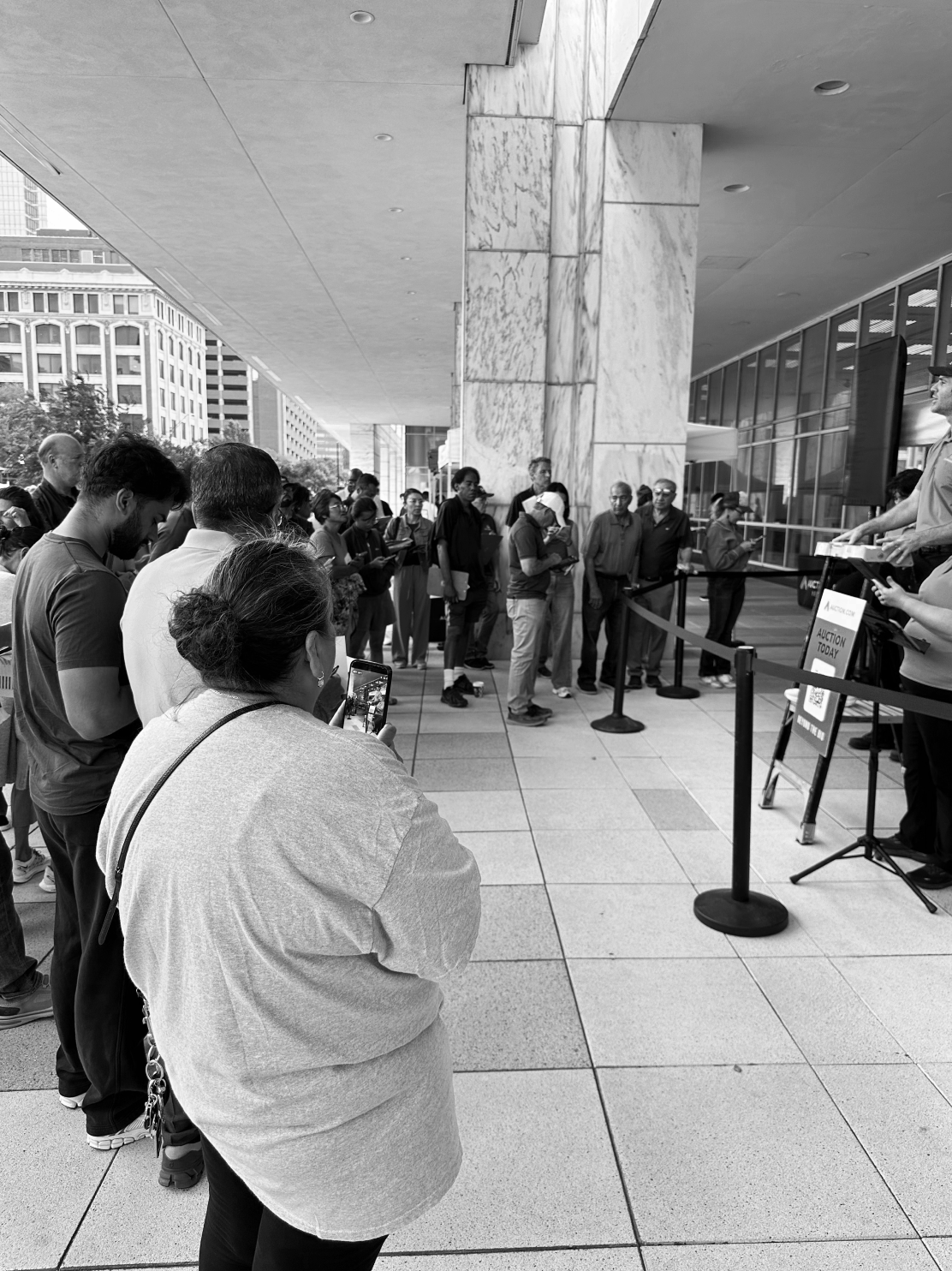
Experienced buyers at live foreclosure auctions show up with cashier checks. Multiple ones, in different amounts, because they don't know which property they'll win or what a home will close at. If the winning bid comes in higher than what they brought, they're out. The money tied up in checks they didn't use sits locked until a refund clears, which can take several days.
The wallet exists to fix that. Funds pre-positioned, flexible, ready — without the bank run before every auction and the manual refund process after.
The problem was that the experience to get there was fragmented across touchpoints with no parity between platforms. And on the other side of the transaction, the staff running live auctions had no reliable view of who had funds ready and who didn't.
Role
Senior Product Designer — Research, IA, Delivery
Platform
iOS Native, Tablet, Mobile Web & Desktop
Team
Cross-functional with PMs, Engineering, Business Operations
Outcome
Unified wallet experience replacing fragmented deposit touchpoints across three auction types
AI Ready
Experienced working in agentic design workflows — using AI to compress research synthesis, generate prototypes from prompts, and query product data directly for data backed design.
Research
I went to the auctions, met with real buyers and field staff, shadowed buyer experience staff on support calls, and sat with transaction coordinators working through post-auction disputes. Research extended beyond buyer-facing sessions — I also shadowed internal operations staff to understand how the same transaction looks from the support and closing side, where the data gaps were, and where manual workarounds had filled in for missing product functionality.
From that I built three personas grounded in Jobs-to-be-Done methodology. The finding that shaped the most decisions came from the experienced buyer. They were the most resistant because cashier checks, for all their friction, gave them certainty. The wallet had to replace that feeling, not just the process.

The Decisions
Three things drove the design.
The trust signal has to come before the ask. Experienced buyers need to know who holds their money before they'll move it. The institutional credibility of the payments partner had to appear before the deposit form, not in the confirmation screen after.
Education before commitment, not after. Buyers in the discovery phase aren't ready to be asked for money — they're still deciding whether to trust the platform. A drawer-based pattern surfaces the right context at the moment they need it, without mandating a behavior change.
Map the architecture before touching the UI. The payments integration introduced two distinct financial flows — an existing deposit system and a new bank-linked layer — that had to coexist behind a single buyer experience. Getting that structure documented before designing anything surfaced legal and compliance dependencies early enough to prevent rework. Without it, screens would have been designed against assumptions that other internal teams would have walked back later.
The Other Side
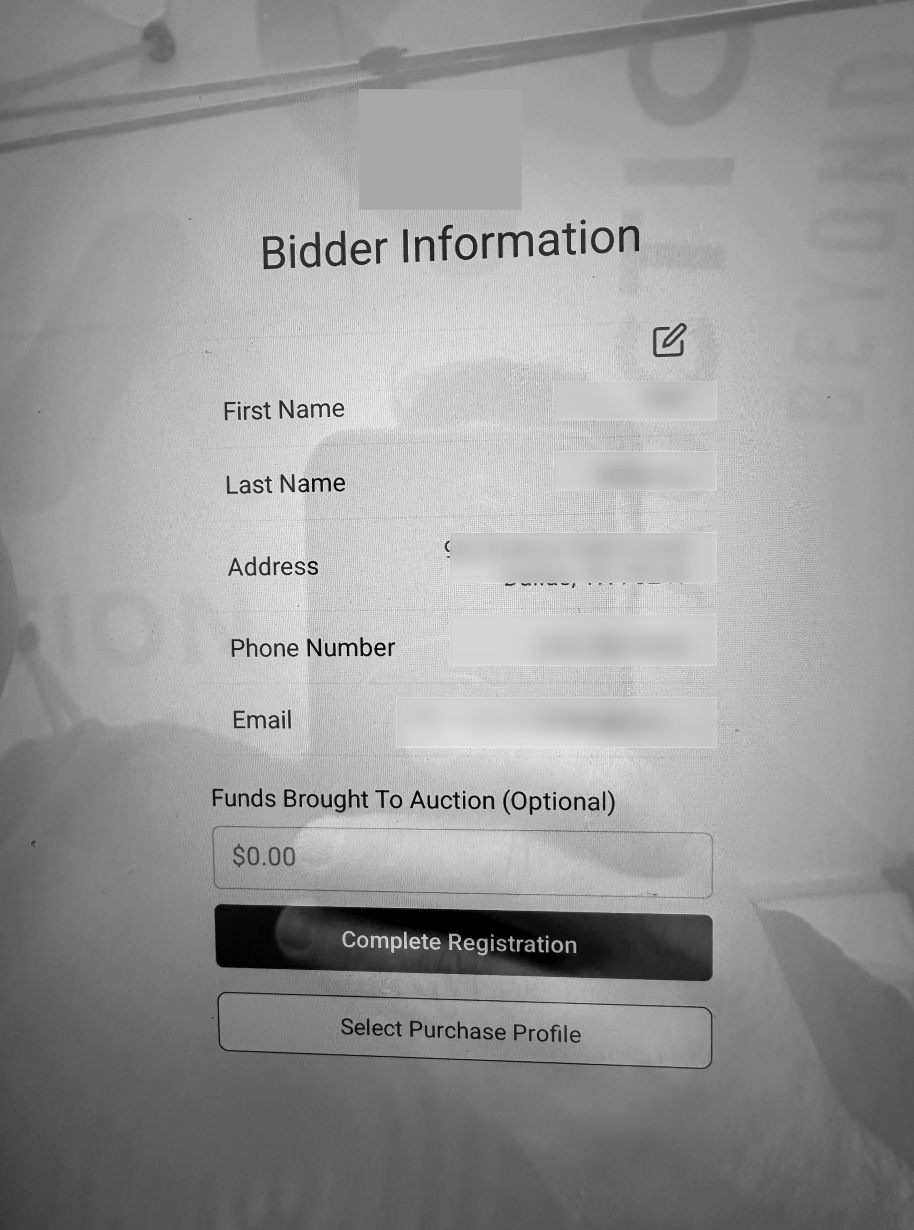
The buyer experience only works if the staff running live auctions can act on the same financial information in the field. I designed that tool in parallel — a tablet interface for on-site registration at courthouse auctions.
Field research found the exact failure mode. Flow order was sending staff to complete registration before checking a buyer's financial profile. One participant described asking a bidder to show their QR code twice after finishing steps out of sequence. The fix was reordering the workflow to match how staff actually operated — verify identity, confirm funds, complete registration — so the right data was captured in the right order from the start.
The most useful thing staff needed to see upfront wasn't purchase history. It was whether a buyer already had funds verified. A verified buyer didn't need to stop and document anything at the table. Staff could meet them where they already were, move them through faster, and hand off a cleaner record to the operations team managing the close.
Where AI Fits In
Dovetail's AI made it easy to pull themes and patterns directly from session recordings, which fed straight into persona building without having to manually comb through every transcript. Claude compressed those findings into working briefs the same day sessions ended. Figma Make generated flow scaffolding from prompts so iteration started faster. Internal agent tools gave direct access to our database and user analytics throughout the process.
Toolkit
Claude · Dovetail · Amplitude · Figma · Figma Make · Internal agent harness