PlayVS Stadium

Overview
Project Type: 0→1 Product Design
My Role: Lead Product Designer – UX, Visual Design, IA
Platform: Responsive Web
Timeline: 3 Months
Team: PM, 3 Engineers, UX Researcher
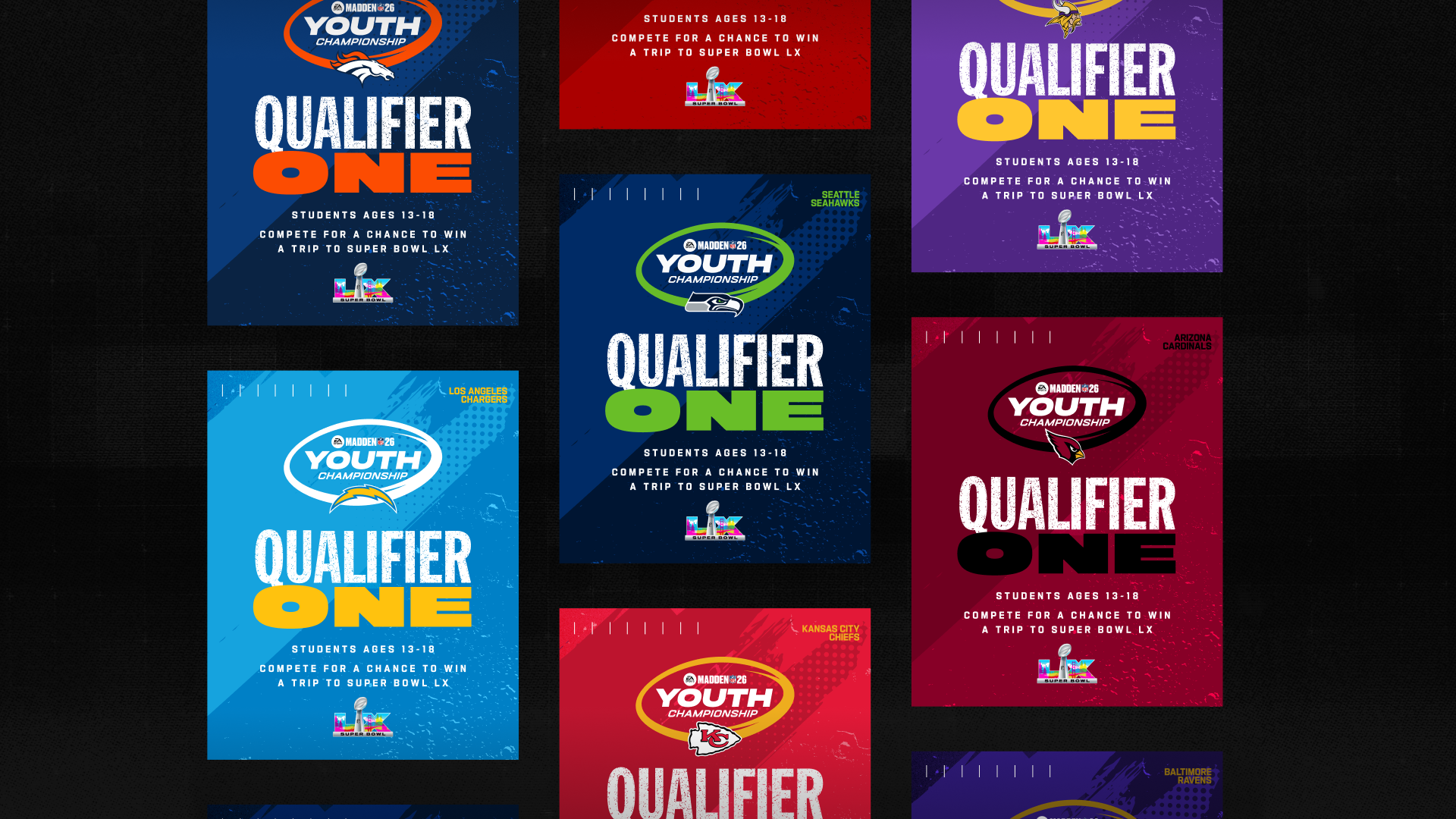
Outcome: Launched on time for EA's Madden Youth Championship — 20K+ sign-ups, 20M+ impressions, and a platform credible enough to land the NFL as a follow-on partner.
The Setup
EA wanted to run a sponsored youth Madden tournament and needed a platform to run it on. We had the infrastructure, but PlayVS was built entirely around schools. It ran on coaches, seasons, and league rosters, and none of that mapped to individual players signing up for an open tournament. We had three months to make it work before the first event went live.
The Design Problem
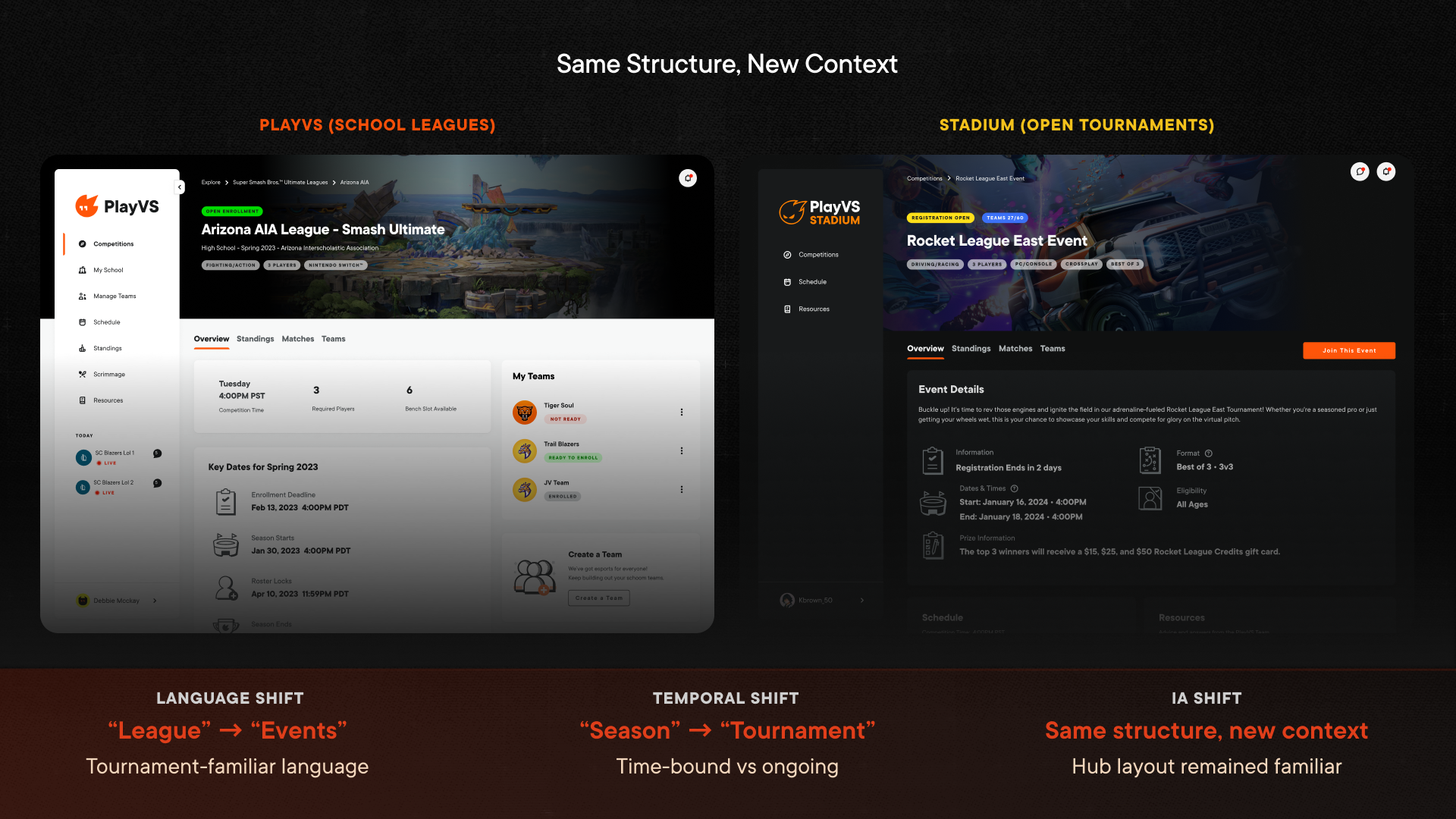
This was more than a reskin. The whole information architecture had to change. The old structure went school from school → league → season → rankings. A tournament needed to go individual → event → bracket → winner. It was the same platform underneath, running for a completely different kind of user. We couldn't rebuild everything from scratch in the time we had, so the real question was what to adapt and what to build new.
The Key Decision
I mapped our existing Nexus design system components to tournament patterns first — adapting language ("League" → "Events", "Season" → "Tournament") while keeping the hub structure familiar to returning users. 50+ components ready to go meant I could focus design effort on what was actually new: the registration flow.
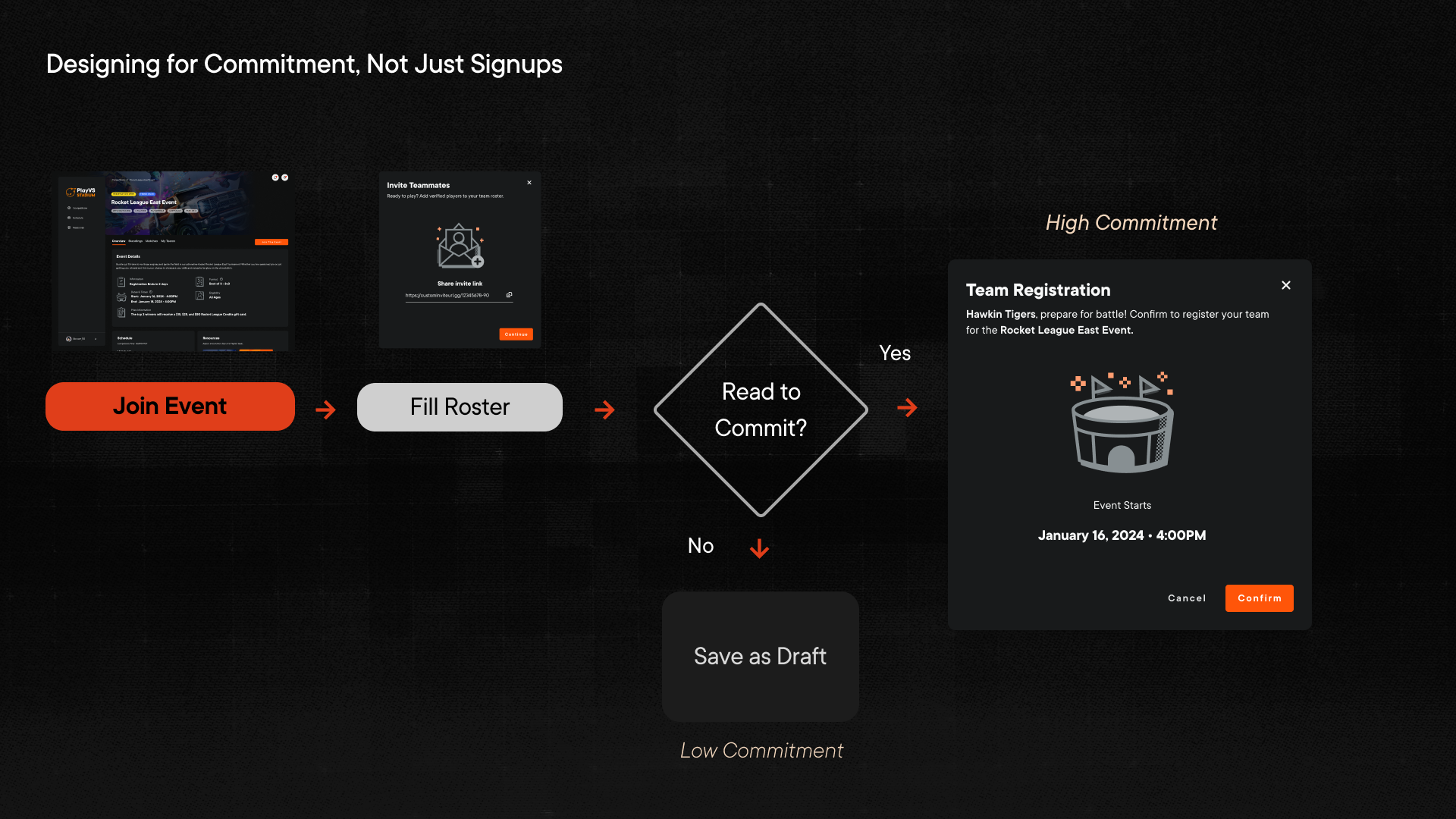
Open tournaments attract casual interest. That means no-shows, forfeits, and a bad experience for players who actually show up. I designed a two-step commitment model — join and fill your roster first, then confirm registration second. The friction was intentional. Only serious teams complete both steps.
What It Unlocked
Stadium launched on time for the Madden Youth Championship — 20K+ sign-ups, 20M+ impressions, 200+ live attendees per event. More importantly it proved the model. The NFL followed, bringing 21 teams to PlayVS for youth esports programs and establishing publisher partnerships as a viable revenue stream beyond school subscriptions.